Customer Service


Jess Franco
Jesús "Jess" Franco is a Spanish filmmaker, composer, and occasional actor whose enormous, chaotic body of work—nearly two hundred features by most counts—turns low‑budget horror, erotica, and pulp thrillers into a kind of obsessive, drifting diary of desire, voyeurism, and cinematic play. Long relegated to the margins as "Eurosleaze," his films have in recent years become the subject of serious academic study, which treats his zoom‑ridden, jazz‑inflected, sexually charged imagery as a unique experiment in what one critic calls a "cinema of drift and trance."
Early Life, Training, and First Films
Jesús Franco Manera was born on 12 May 1930 in Madrid, Spain, growing up under the shadow of the Spanish Civil War and the authoritarian, censorious Franco regime that followed. As a young man he studied music and law but gravitated toward filmmaking, working initially as a composer, writer, and assistant director in the Spanish industry. His early mentor was Juan Antonio Bardem, a politically engaged director associated with Spanish social‑realist cinema; Franco served as assistant director on Bardem's films in the 1950s, absorbing both practical skills and a sense that cinema could carry political and existential meanings beneath genre surfaces.
Franco directed his first feature, Tenemos 18 años (1959), a light comedy that barely hints at the wild directions his later work would take. His international breakthrough came with Gritos en la noche (1962), released abroad as The Awful Dr. Orlof, a ghoulish tale about a mad surgeon harvesting women's skin that mixes gothic horror with clear echoes of Georges Franju's Eyes Without a Face (1960). Already here one can see traits that will recur in his career: a fascination with medical violation, the vulnerable female body, and a camera that alternates between patient observation and sudden, aggressive movement.
Prolific Output and Industrial Survival
By most counts, Franco directed around 180 to almost 200 features, depending on how one tallies pseudonymous credits and overlapping cuts; IMDb lists about 195 films. During his peak periods he averaged as many as eight or nine films per year, a pace that would be impossible in a conventional studio system but became feasible through a patchwork of co‑productions, small European financiers, and highly flexible scripts he could bend to different markets.
He worked under dozens of pseudonyms—Jess Frank, Franco Manera, Clifford Brown, David Khune, Betty Carter, and many more—often to accommodate different national censorship boards or to dissociate his name from more explicitly pornographic projects. His "periods," as critics like to call them, are defined less by aesthetic phases than by money men: the Karl Heinz Mannchen years produce psychedelic erotica like Vampyros Lesbos and She Killed in Ecstasy; other stretches correspond to German, Swiss, or French producers who demanded certain mixes of sex, horror, and exotic locations.
Industrial survival shaped his working methods. Many films were shot in a matter of weeks, sometimes days, with locations reused across projects and scripts rewritten on the fly to suit available sets or actors. This speed often resulted in continuity errors, mismatched lighting, and abrupt tonal shifts, but it also produced a peculiar sense of improvisation: Franco's cinema feels less like carefully engineered genre machine than like a continuous stream of images, reworking favorite motifs over and over again.
Collaborations, Muses, and Personal Entanglements
Franco's career is inseparable from his relationships with key performers. Early in his international phase he worked with Howard Vernon, whose craggy face and slightly theatrical menace recur in numerous roles—from mad doctors to decadent aristocrats—anchoring Franco's universe with a recognizable, almost reassuring presence.
His 1960s and early 1970s films with Soledad Miranda, especially Vampyros Lesbos (1971) and She Killed in Ecstasy (1971), are often considered among his finest, blending psychedelic color schemes, nightclub psychedelia, and coolly erotic performances. Critics note that Miranda, who had spent years in decorative roles, becomes in Franco's hands a "goddess of psychedelic perversity," an emblem of liberated desire that is also trapped within violence and exploitation. Her death in a car accident in 1970 profoundly affected Franco, closing one chapter of his work and arguably deepening the mournful, obsessive tone of later films.
In the mid‑1970s and beyond, Lina Romay emerged as his central muse, partner, and eventual wife. Romay's comfort with explicit nudity and her exhibitionist performances enabled Franco to push further into erotic and hardcore territory, but she also functioned as a kind of co‑author, appearing in everything from sleazy comedies to more contemplative horror pieces. Their relationship blurs the line between personal intimacy and artistic collaboration, with Romay's body and face becoming the axis around which much of his late cinema turns.
Style: Zooms, Jazz, and the Cinema of Drift
On the surface, Franco's films can look like a messy collage of grindhouse elements: sexy nightclub acts, BDSM rituals, secret agents, mad scientists, lesbian vampires, bird‑women, cannibal gods, and copious nudity. The camera swings wildly between long shots and sudden snap zooms; editing can be jagged; dialogue is often sparse or dubbed in multiple languages.
Yet many critics argue that beneath this apparent chaos lies a remarkably consistent style. He is fond of long, drifting takes that follow bodies as they wander through hotel corridors, beach landscapes, or modernist architecture, creating a feeling that time is stretching, dissolving, or looping. Bright Lights Film Journal describes his work as a "cinema of drift and trance," where narrative goals are secondary to the hypnotic pull of erotic gestures and movement through space. Slow motion often heightens this effect, turning simple actions—a woman walking down a staircase, a lover turning their head—into elongated, almost ritualistic events.
Music is crucial. Franco, a jazz enthusiast and composer, frequently uses lounge, exotica, or free‑form jazz soundtracks, some co‑created with musicians like Manfred Hübler and Siegfried Schwab. In Vampyros Lesbos and She Killed in Ecstasy, the legendary soundtracks fuse groovy bass lines, off‑kilter horns, and psychedelic motifs into a sonic world that is as important as the visuals, making the films feel like extended music videos for a decadent, imaginary nightclub. Fritz Lang reportedly called Franco's Succubus "the first erotic film I've seen all the way through because it's a beautiful piece of cinema," suggesting that at least some contemporaries recognized his ability to orchestrate image and sound beyond mere titillation.
Franco himself once described the director as "a pure voyeur, not just of fucking, but of everything… of ships crossing the sea, of horses stampeding across the prairie," a formulation that aligns his erotic gaze with a more general fascination with motion and looking. His films position the viewer as voyeur, collapsing the distance between camera and spectator; sex scenes, violent encounters, and even banal conversations are often staged as invitations to watch without intervening, which can be both unsettling and strangely contemplative.
Themes: Erotica, Sadism, and the Marquis de Sade
Franco's preoccupations are clear: the female form, erotic lesbianism, sadomasochism, the Marquis de Sade, vengeful violence, and the strange intersections of sex and death. He returns repeatedly to narratives of women exploited by institutions—psychiatric clinics, prisons, criminal networks—who either succumb to or violently overthrow their abusers. In She Killed in Ecstasy, for instance, Miranda's character takes bloody revenge on a group of doctors who have destroyed her husband, embodying both the male fantasy of "crazy" woman and a more subversive image of female fury.
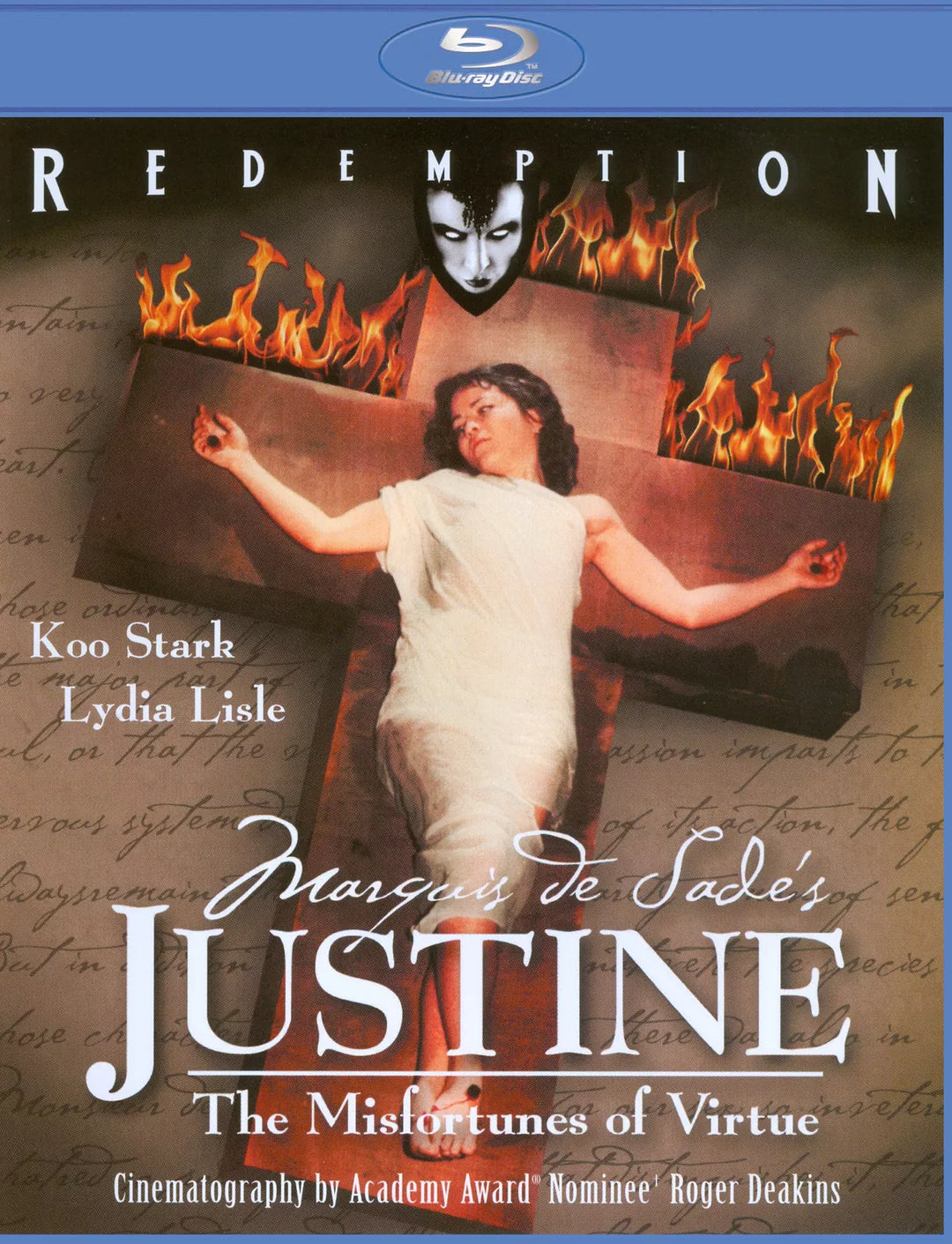
His attachment to Sade is not subtle. Films like Eugenie… the Story of Her Journey into Perversion and Eugenie de Sade explicitly riff on Sadean plots, using the libertine's scenarios of seduction, corruption, and cruelty as structures for cinematic explorations of power and pleasure. These works can feel nihilistic, but they also dramatize the ways erotic desire, especially female desire, is entangled with control, surveillance, and violence in patriarchal systems.
Critics remain divided on whether Franco's erotica subverts heteronormativity or reinscribes it. Some essays argue that his surreal softcore and explicit imagery invite viewers to become voyeurs of alternative forms of intimacy, thereby challenging straight male expectations and destabilizing dominant fantasies. Others point out that the camera's frequent fixation on women's bodies and the repetition of rape or torture scenarios risk reinforcing exploitative dynamics, even if Franco thinks he is merely "drifting" through desire. That ambivalence—between genuine provocation and tired sleaze—is part of why his work remains controversial and compelling.
Art vs. Trash: Reception and Reevaluation
For decades, mainstream critics largely dismissed Franco as a purveyor of trash cinema, lumping his filmography under the umbrella of schlock and sleaze. The sheer volume of his output, combined with uneven quality and hardcore detours, made it easy to treat him as a curiosity rather than a serious artist. Some films are undeniably shoddy, and even admirers admit that his worst work can astonish with its breathtaking lack of finesse.
However, a parallel cult emerged: horror fans, Euro‑cult enthusiasts, and later academics began to value Franco's signature works—titles like The Awful Dr. Orlof, Succubus, Vampyros Lesbos, She Killed in Ecstasy, The Erotic Rites of Frankenstein, and Lorna the Exorcist—as occupying a liminal terrain between exploitation and avant‑garde cinema. These films play with time and space, the porous logic of dream and nightmare, and the nature of reality itself, using cheap sets and explicit material as raw material for hallucinatory experiences.
Academic attention crystallized with works like The Films of Jess Franco (2018), a collection of critical essays that place him in context, analyze his horror and erotic themes, and examine the cult reception around his films. Scholars such as Antonio Lázaro‑Reboll and Ian Olney argue that Franco's cinema, while often trashy on the surface, is madly inventive in its reworking of genre tropes, and that its obsessive focus on drifting bodies and broken narratives reflects deeper anxieties about modernity, surveillance, and desire.
Later Years and Death
Franco continued working into the 1990s and early 2000s, sometimes with dwindling budgets but undiminished compulsion. He declared in a Film Comment interview that he felt compelled "to always be filming, to always be creating," framing filmmaking not as a career but as an addiction to images and voyeurism. Even by the end of his life, he was still shooting digital features with Romay and other longtime collaborators, pushing his aesthetics into cheaper technologies while retaining his taste for erotic horror and loose plotting.
He died in Málaga, Spain, on 2 April 2013, at the age of 82, reportedly from complications of a stroke, just over a year after Lina Romay's death from lung cancer in 2012. Obituaries from BFI, IMDb, and Euro‑cult fan communities described him as a genuine original whose work fits in a category all its own, and whose passing represented a real loss to cinema—despite, or perhaps because of, the throwaway nature of many of his films.
Legacy and Cult Reception
Today, Franco occupies a paradoxical position: he is both a poster child for Eurosleaze and a subject of university press monographs. Boutique labels and streaming platforms curate selections of his most essential films from a filmography that can feel bottomless. Lists for newcomers recommend starting with Vampyros Lesbos, She Killed in Ecstasy, Succubus, The Awful Dr. Orlof, and The Erotic Rites of Frankenstein, which together showcase his blend of erotic spectacle, jazz soundscapes, and hypnotic pacing.
For collectors of cult and exploitation cinema, Franco provides a spine for understanding European cult cinema's most extreme experiments in sex and horror. His films make visible the industrial compromises of low‑budget production, but they also carve out a distinctive constellation of themes—voyeurism, lesbian desire, sadistic power structures, surreal architecture—that invite serious analysis and repeat viewing. He is not an easy director to sum up, and some viewers will always struggle with the roughness and explicit content, yet his work endures because it transforms exploitation into an oddly personal, haunting, and sometimes unexpectedly beautiful world.
Selected Filmography
- The Awful Dr. Orlof (1962)
- Succubus (1968)
- Vampyros Lesbos (1971)
- She Killed in Ecstasy (1971)
- The Erotic Rites of Frankenstein (1972)
- Eugenie de Sade (1973)
- Lorna the Exorcist (1974)
- Jack the Ripper (1976)
- Faceless (1988)
- Tender Flesh (1997)
References
- Lázaro‑Reboll, Antonio. Spanish Horror Film. Edinburgh University Press, 2012.
- Olney, Ian. Euro Horror: Classic European Horror Cinema in Contemporary American Culture. Indiana University Press, 2013.
- Tohill, Cathal and Pete Tombs. Immoral Tales: European Sex and Horror Movies 1956–1984. St. Martin's Griffin, 1995.
- Bright Lights Film Journal. "The Cinema of Jess Franco." brightlightsfilm.com.
- IMDb. "Jess Franco." imdb.com/name/nm0289539/
- The Guardian. "Jess Franco obituary." 3 April 2013.
- BFI Screenonline. "Jess Franco." screenonline.org.uk.